Abraham Taylor Reparative Research Project
Research, Reckoning, and Institutional Accountability at WashU
The Abraham Taylor Reparative Research Project is a student-driven research initiative supported by the Department of African & African American Studies (AFAS) that confronts Washington University’s historical entanglements with eugenics, medical racism, and the collection and use of human remains.
By bringing together archival research, ethical inquiry, and public scholarship, the project creates space for deeper institutional reflection while also advancing conversations about accountability, repair, and the responsibilities of universities in the present.
Confronting a Difficult Institutional History
At the center of the project is the legacy of Dr. Robert J. Terry (1871–1966), a former head of anatomy at Washington University School of Medicine. His work contributed to what became known as the Terry‑Trotter Human Remains Collection, which includes the remains of more than 1,800 individuals—many of whom were Black and whose bodies were obtained without consent.
Historical accounts emphasize that this collection was not simply a neutral scientific resource. Rather, it was made possible through systems that disproportionately targeted vulnerable populations—particularly individuals who died in public institutions such as hospitals, prisons, and poorhouses.
These histories raise urgent ethical questions about how knowledge was produced, who bore the costs of that knowledge, and how institutions continue to benefit from these legacies today.
Research That Shapes Institutional Change
The Abraham Taylor Reparative Research Project builds on momentum generated by student scholarship within AFAS. According to the Office of Neuroscience Research, student research in 2025 played a role in informing the Chancellor’s recommendation and the Board of Trustees’ unanimous decision to remove Robert J. Terry’s name from university features due to his involvement in eugenics and human remains trafficking networks.
This connection between student research and institutional decision-making underscores a central premise of the project: that academic work can—and should—play a role in shaping how universities respond to their histories.
Archival Research as Ethical Practice
The project is grounded in sustained archival research that examines the historical foundations of medical research at WashU and in St. Louis. By analyzing documents, correspondence, and institutional records, student researchers work to make these histories more visible while also situating them within broader social, political, and ethical contexts.
This work challenges the idea of archives as neutral repositories. Instead, it approaches them as sites where questions of power, representation, and erasure are actively negotiated—requiring careful interpretation and ethical reflection.
The Abraham Taylor Reparative Research Fellowship
In the 2025–2026 academic year, the Abraham Taylor Reparative Research Fellowship was established to support undergraduate research and to honor those whose lives and remains were impacted by Terry and his associates.
Through the fellowship, students engaged in a range of research activities, including:
- Digitizing over 10,000 pages of archival material
- Analyzing literature on the medical and ethical implications of the Terry‑Trotter collections
- Training in archival and historical research methods
- Conducting comparative research on human remains repatriation processes
- Producing original research outputs and public-facing work
This collaborative work fosters interdisciplinary learning while equipping students to engage critically with histories of inequality and their ongoing impacts.
From Acknowledgment to Accountability
A key contribution of the project is its emphasis on moving beyond acknowledgment toward meaningful accountability. As highlighted in public commentary, confronting institutional histories of harm requires more than recognition—it requires action.
This includes:
- Rethinking how human remains are studied, stored, and, where possible, returned
- Engaging descendant and affected communities in decision-making processes
- Revising institutional narratives to reflect historically marginalized perspectives
- Integrating ethical reflection into research and teaching practices
Through this work, the Abraham Taylor Reparative Research Project reframes historical inquiry as an ongoing responsibility—one that connects past injustices to present-day institutional choices.
Public Engagement and Student Scholarship
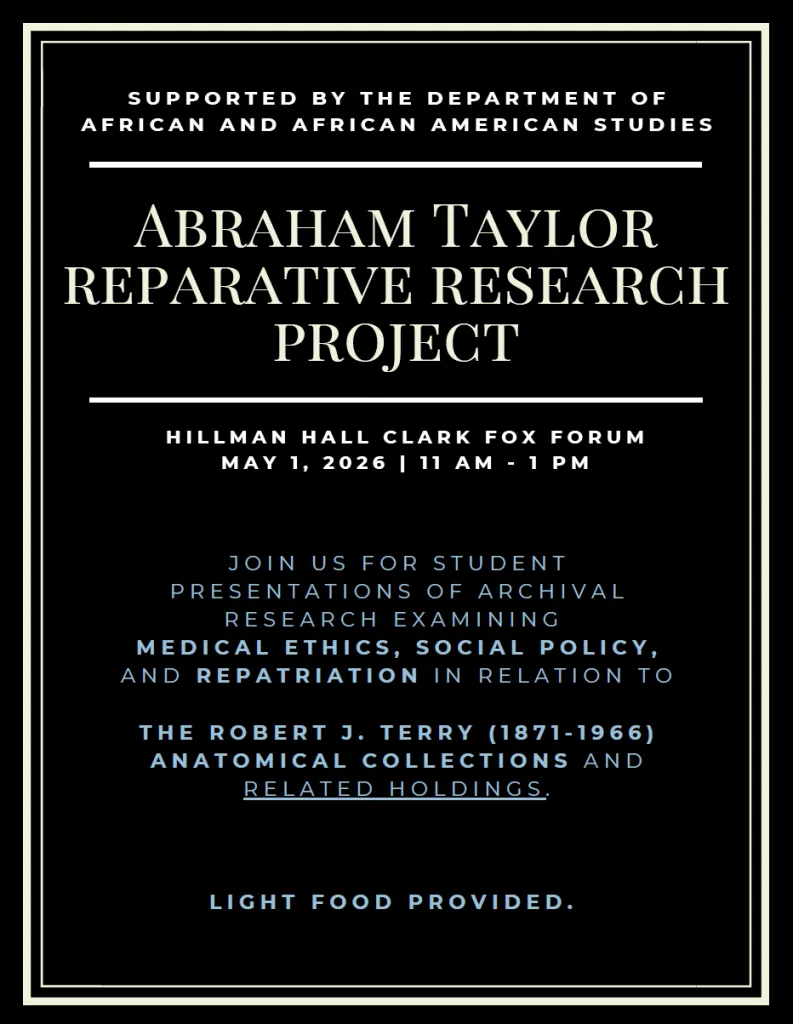
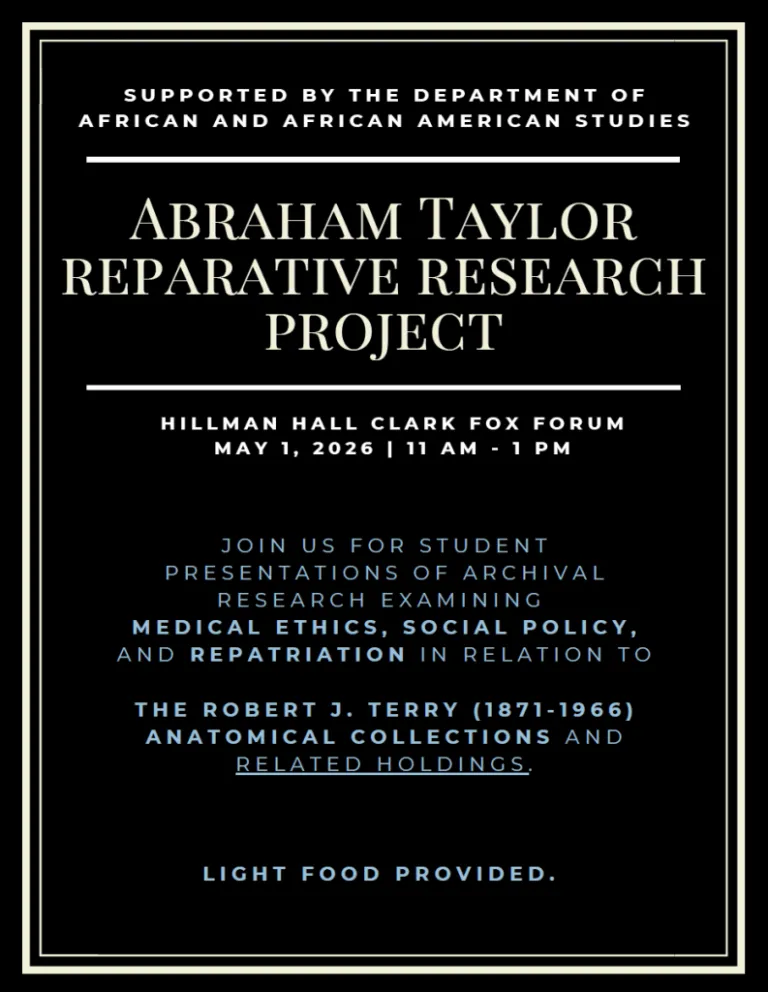
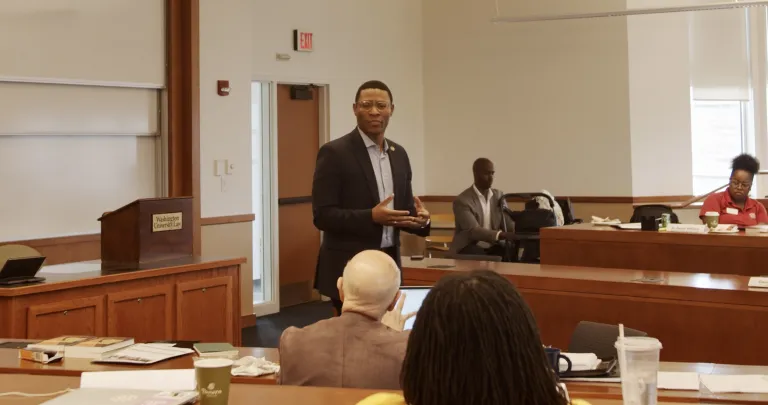
The project’s research has been shared through public presentations and symposia that bring students, faculty, and the broader university community into conversation. These events highlight student work examining medical ethics, social policy, and repatriation in relation to the Terry collections and related archival materials.
By centering student voices, the project reinforces the role of undergraduate research not only in producing knowledge, but also in shaping how that knowledge is communicated and applied.
Looking Ahead
The Abraham Taylor Reparative Research Project will continue to expand in the coming academic year, building on its foundation of interdisciplinary research and public engagement.
As the project grows, it will remain focused on a central set of questions:
- How should institutions reckon with histories of exploitation?
- What forms of repair are possible—and who defines them?
- What responsibilities do universities carry toward those whose lives contributed, willingly or not, to their advancement?
In grappling with these questions, the project positions AFAS as a leader in linking scholarship to institutional accountability, and in demonstrating how research can contribute to more just and equitable futures.
Learn More
- View the Student Research Symposium event post
- Read the StudLife op‑ed: “Reckoning with the past: Accountability for whose bodies built WashU”